Product category

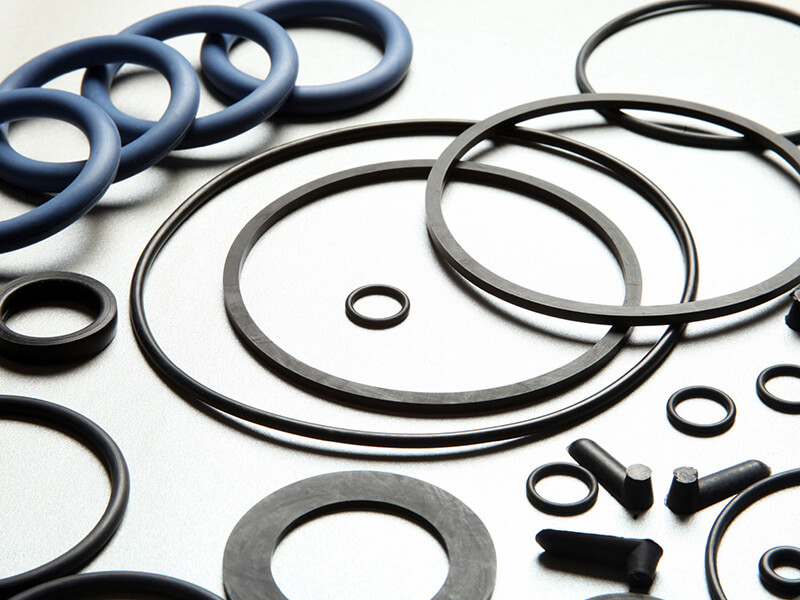 O-Rings
O-rings, one of the most widely used sealing solutions today, traces its roots back to ancient times when leather and fiber were used to reduce leaks, but its modern form was invented in 1937 by Danish-American machinist Niels Christensen, who patented the simple elastomeric torus (ring shaped doughnut) that seals by compression.
With the rise of vulcanized rubber in the 19th century and the O-ring’s classification as critical military technology during World War II, it became standard in aircraft, hydraulics, and pneumatics. Post-war, O-rings spread rapidly across automotive, industrial, chemical, and aerospace applications, though their limitations were famously underscored in the 1986 Challenger disaster when cold temperatures caused an O-ring failure in a space shuttle booster. Over time, materials evolved from natural rubber to engineered elastomers like nitrile (NBR), EPDM, Viton®/FKM, silicone, PTFE, and even FFKM for extreme environments.
Today, O-rings are indispensable worldwide, valued for their simplicity, low cost, adaptability, and reliability in applications ranging from household appliances and cars to oil refineries, medical devices, and spacecraft.
Find the O-Ring Type Quickly
- O-Rings Styles
- O-Ring Materials
- O-Ring Selection
- O-Rings Size Chart
- O-Ring Groove Design Parameters
- Chemical Resistance
Why Partner With Us?
- Certified Quality: O-rings that meet or exceed stringent industry standards.
- Expert Support: Direct access to engineers for material selection and application guidance.
- Vast Inventory: The sizes and compounds you need, in stock and ready to ship.
Browse our catalog or submit an RFQ to get the precise components your project requires.
O-Ring Materials