|
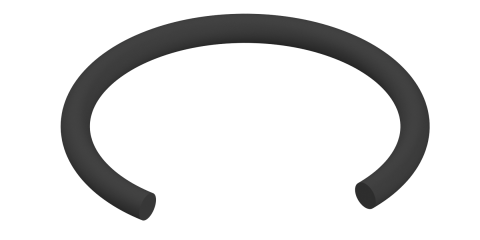
| Standard Round (Torus) O-Ring- Most common style, simple circular cross-section
- Used in static and dynamic applications
|
|
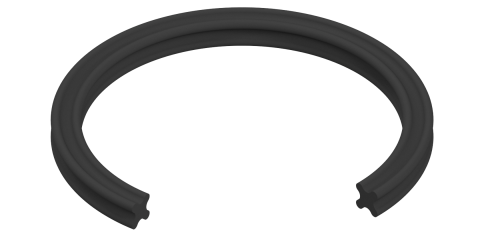
| Quad Ring (X-Ring)- Cross-section is clover-leaf shaped, four lobes
- Double the sealing points of a round O-Ring
- Lower friction and less twisting compared to round O-ring
- Ideal for Dynamic applications
|
|
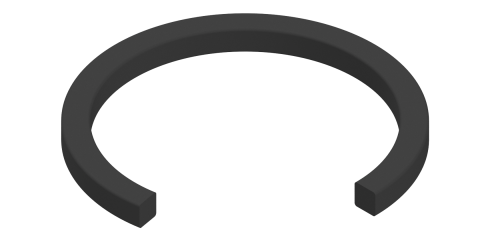
| Square Cut Ring- Has square or rectangular cross-section
- Often used as low-cost substitute for standard O-Ring
- Improved resistance to extrusion
- Static applications only
|
|
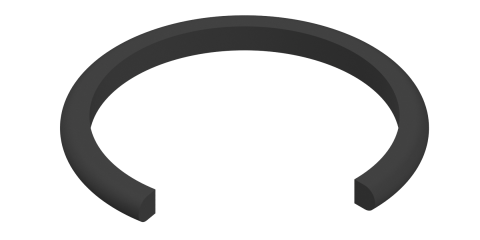
| D-Ring- Has a flat base and curved top (like a D)
- Flat base prevents rolling or twisting in dynamic applications
- Excellent in reciprocating or rotary environments
|
|
| Encapsulated O-Ring- An elastomer core (like silicone or FKM) inside a PTFE jacket
- The combination provides the elasticity of rubber with the chemical resistance of PTFE
- Common in food, chemical, and pharmaceutical industries
- Static applications
|
|
| Back-up Rings- Not a seal on its own, but used with O-rings to prevent extrusion at high pressures
- Typically made from PTFE, rubber, or hard plastic
- Common in hydraulic and high-pressure gas systems
|
|
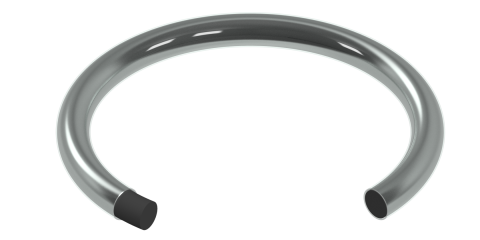
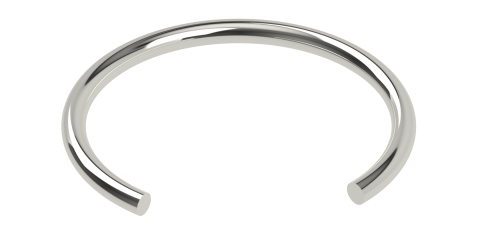
| Metal O-Rings- Used in extreme environments: high pressure, cryogenic, and ultra-high vacuum
- Usually made of stainless steel, Inconel, or other specialty alloys
- Often spring energized or can be solid construction
|